An AI tarot reading pairs a card draw with an AI-written interpretation. On TarotDew, you draw real Rider–Waite–Smith cards, read the original written meaning of each, and then get an AI synthesis of the whole spread for your question. One AI follow-up per day is free. No sign-up is needed.
Example reading
Question: I am deciding whether to move cities. Help me think it through.
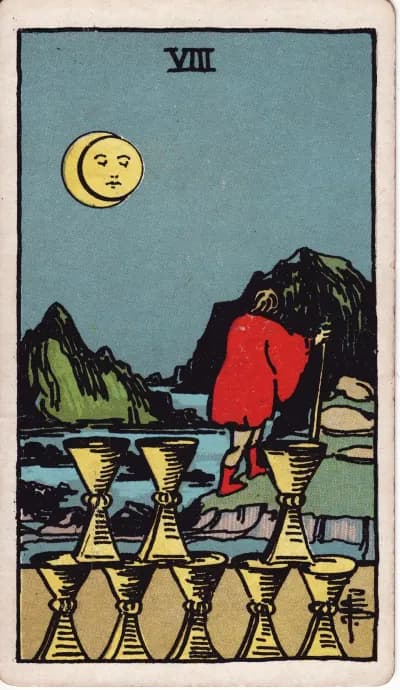
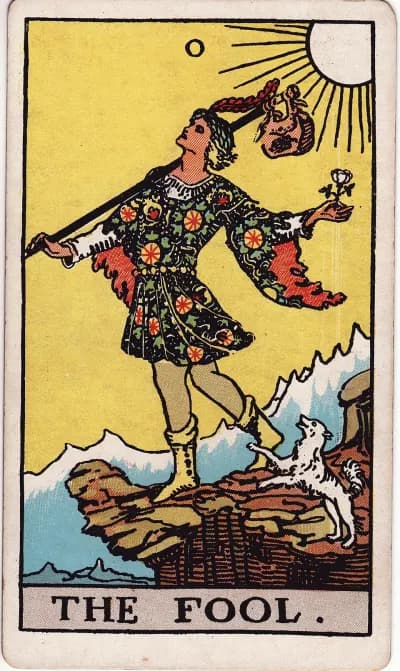
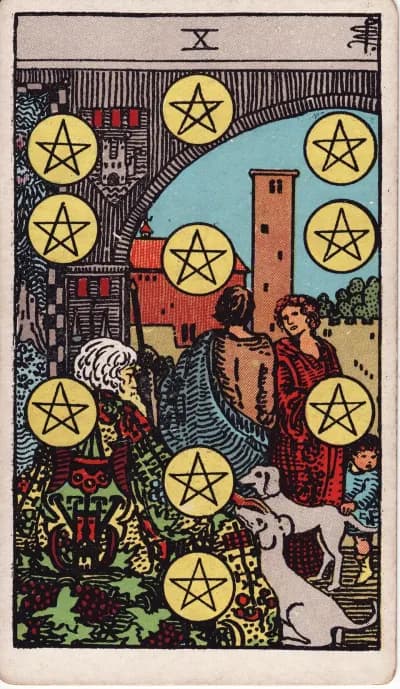
Result: Past: Eight of Cups, a quiet sense of outgrowing a place. Present: The Fool, curiosity and a leap that feels both exciting and unfamiliar. Future: Ten of Pentacles, long-term stability. The AI note reads this as a move motivated by growth, and suggests listing what stability means to you before deciding. It is a prompt for your own thinking, and you stay in charge.
How an AI tarot reading works here
There are two ways to build an AI tarot tool. One lets the AI invent the cards. The other lets you draw real cards and asks the AI to explain them. TarotDew does the second.
- You choose a spread, add a question and draw the cards.
- Each card appears with its original written meaning, which TarotDew wrote ahead of time.
- An AI then writes a synthesis of the whole spread for your question.
- You can ask one follow-up question per day for free. Plus offers unlimited follow-ups.
Because the written meanings are always visible, you can check the AI against the source. If the summary sounds off, trust the card text and your own judgment.
What AI adds, and what it does not
The best thing AI adds to tarot is connection. Ten cards in a Celtic Cross contain a lot of detail, and a summary that links them to your specific question can save you from getting lost.
| AI is good at | AI is not able to |
|---|---|
| Linking several cards into one narrative | Predict your future |
| Tailoring language to your question | Know your circumstances beyond what you typed |
| Answering follow-ups in plain English | Give medical, legal or financial advice |
| Explaining a confusing card in new words | Replace your own judgment |
Treat the AI the way you would treat a thoughtful friend with a deck: useful, but not a prophet.
A good habit is to read the card meanings before the summary. That way your own impression forms first, and the summary becomes a second opinion rather than the only voice. If the two disagree, that is interesting rather than a problem. It tells you which parts of the reading you are drawn to and which you might want to question.
Finally, remember that you can always ignore the summary entirely. The cards and their written meanings are the core of the reading, and the AI is an optional layer that you can use or skip.
Writing a question the AI can work with
A little context goes a long way. The AI sees your question and your cards, so a vague question gets a vague summary.
- Say what you are deciding, not just what you hope: I am deciding whether to move for a job, and feeling torn.
- Keep it to one subject.
- Add the timeframe if it matters: over the next three months.
- Use follow-ups to dig into one card rather than re-asking the whole question.
Avoid questions about diagnosis, pregnancy, death, lawsuits or investments. Those are outside what an entertainment tool should answer.
AI tarot, with honest limits
TarotDew is for entertainment and self-reflection. The AI is a writing tool that explains cards. It does not channel anything, and no reading, human or AI, can promise an outcome.
The cards themselves are the 1909 Rider–Waite–Smith deck illustrated by Pamela Colman Smith, and the meanings are written by TarotDew. Free draws need no account, and results do not come with ads or upsell pop-ups.
How TarotDew compares
| TarotDew | Tarotap | chatarot.ai | Labyrinthos | |
|---|---|---|---|---|
| AI reading | AI synthesis + 1 free follow-up/day | Yes, with follow-ups | Yes, spread-aware chat | Paid credits |
| Free use | Unlimited yes/no, 1-card and 3-card | Daily: 1 AI reading, 1 yes/no, 1 love | Free tier plus paid credits | Card meanings library |
| Sign-up needed | Never | Not required (per site) | — | — |
| Price | Free to read; optional Plus | Plus $12.99/month | Credit packs (price not listed) | App Premium $9.99; AI uses paid credits |
| Daily card | Daily card + streak + calendar | Daily card | No | Daily page in app |
| Entertainment disclaimer | Shown under every result | In FAQ (professional-advice wording) | Not seen | — |
Checked on each site's public pages in October 2026; features change, so check them yourself too.
Frequently asked questions
What is an AI tarot reading?
It is a tarot reading where an AI writes the interpretation. On TarotDew, real cards are drawn first and their written meanings are shown, then an AI summarizes how the whole spread relates to your question.
Is AI tarot accurate?
Tarot is not a prediction tool, whether human or AI. An AI reading is useful if it helps you reflect. Check the summary against the written card meanings and your own judgment. It is for entertainment and self-reflection.
Is AI tarot free on TarotDew?
Yes, to start. Spreads and the AI summary are free, with one free AI follow-up question per day. Plus gives unlimited follow-ups and Celtic Cross readings. You do not need an account to try it.
Does the AI pick the cards?
No. The cards are drawn from a shuffled 78-card deck first. The AI then only reads the cards that were drawn and explains how they relate to your question, so the draw itself is independent of the interpretation and the written card meanings stay visible.
What can I ask the AI follow-up?
Ask about a specific card, a position or how to apply the reading to your situation. Examples: What does the Moon mean in my second position? or How could I act on this? Avoid medical, legal or financial predictions.
How is AI tarot different from a human reader?
A human reader brings conversation and lived experience. AI brings speed, availability and clear summaries. Neither can predict the future. TarotDew presents AI readings for entertainment and self-reflection, not as advice.