A tarot card reading lays out cards in positions, and each position asks a different question, such as past, present or future. You read each card's meaning through its position, then look at how the cards connect. On TarotDew you can draw one, three or situation–action–outcome cards free, with the written meaning beside every card and a short summary of the whole spread.
- Spreads here: one card, past–present–future, situation–action–outcome.
- Every card shows its written meaning for its position.
- A written summary connects the cards for your question.
- Free, unlimited, no sign-up.
Example reading
Question: How can I handle the tension with my roommate?
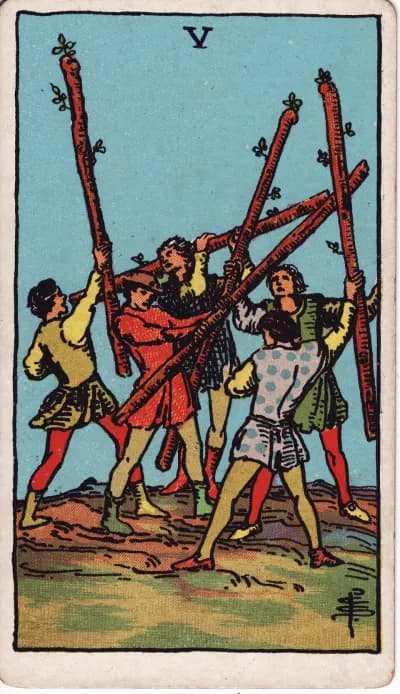
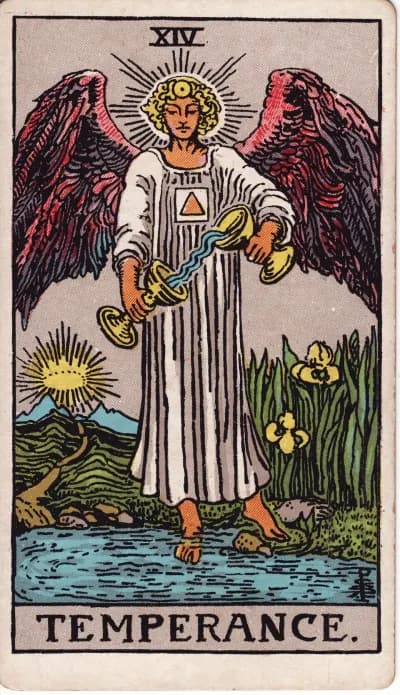
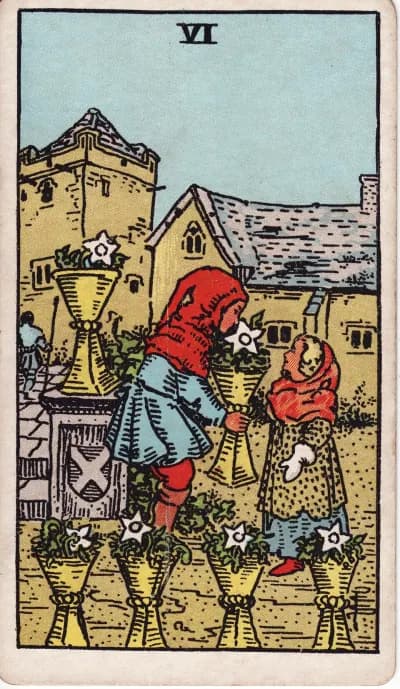
Result: Situation: Five of Wands shows small clashes, more friction than real conflict. Action: Temperance suggests meeting in the middle and slowing the pace of the conversation. Outcome: Six of Cups points to easier, friendlier days if you do. Together: lower the temperature first, then talk.
Positions matter more than cards
The same card reads differently depending on where it lands. The Tower in a past position describes an upheaval already behind you; in an outcome position it suggests a shake-up still to come. That is why every card on TarotDew is shown with its position label.
| Spread | Positions | Use it for |
|---|---|---|
| One card | Your card | A focus or quick check-in |
| Past · Present · Future | Past, Present, Future | Seeing how a situation is moving |
| Situation · Action · Outcome | Situation, Action, Outcome | Deciding what to do next |
Reading combinations
Once each card makes sense on its own, look at the spread as a whole. A few patterns are worth noticing:
- Several Major Arcana: this is a significant chapter, not a passing mood.
- Mostly one suit: the question lives in that area of life (Cups feelings, Pentacles work and money, Swords thought, Wands energy).
- Many reversed cards: things are stuck or internal; look at what is being held back.
- Repeated numbers: two Threes, say, emphasize that number's theme (growth, collaboration).
The written summary does this pass for you, but it is worth trying yourself first.
How to do a tarot card reading
- Write one clear, open question about your own path.
- Pick a spread: three cards suits most questions.
- Draw and read each card in its position.
- Look for patterns across the cards.
- Close with one practical step you could take this week.
When to go deeper
For a bigger question, the ten-card Celtic Cross looks at the challenge, foundation, hopes and likely outcome in one layout; one per day is free. For love questions, the five-card love spread places you, the other person and the connection side by side.
How TarotDew compares
| TarotDew free | TarotDew Plus (optional) | A physical deck | |
|---|---|---|---|
| Yes/no, one-card, three-card | Unlimited | Unlimited | Unlimited |
| Celtic Cross | 1 per day | Unlimited | Unlimited |
| AI follow-up question | 1 per day | More per day | — |
| Written meaning beside each card | Yes | Yes | Guidebook |
| Daily card + streak | Yes | Yes | No |
| Sign-up | Never | Account for billing | — |
| Ads | None | None | — |
Checked on each site's public pages in October 2026; features change, so check them yourself too.
Frequently asked questions
How does a tarot card reading work?
You ask a question, draw cards into positions, and read each card through its position. The reading is a prompt for reflection, not a prediction.
How many cards should I draw?
Three is the best start: enough for a story, short enough to read in minutes. One card suits a daily check-in; ten cards suit a big question.
Can I do a tarot card reading for myself?
Yes. Most people read for themselves. Written meanings beside each card make it easy even as a beginner.
What questions are best for a tarot reading?
Open questions about your own choices: "What can I do to…" or "What should I understand about…". Avoid medical, legal or financial decisions.
Is this tarot card reading free?
Yes. One-card, three-card and situation–action–outcome readings are unlimited and free, with no account.
What if I don't like my cards?
Read them anyway: a difficult card often names the thing worth addressing. Redrawing straight away usually just adds noise.